The ultimate Guide to stargazing in Europe without a telescope or expensive gear
6/17/20267 min read
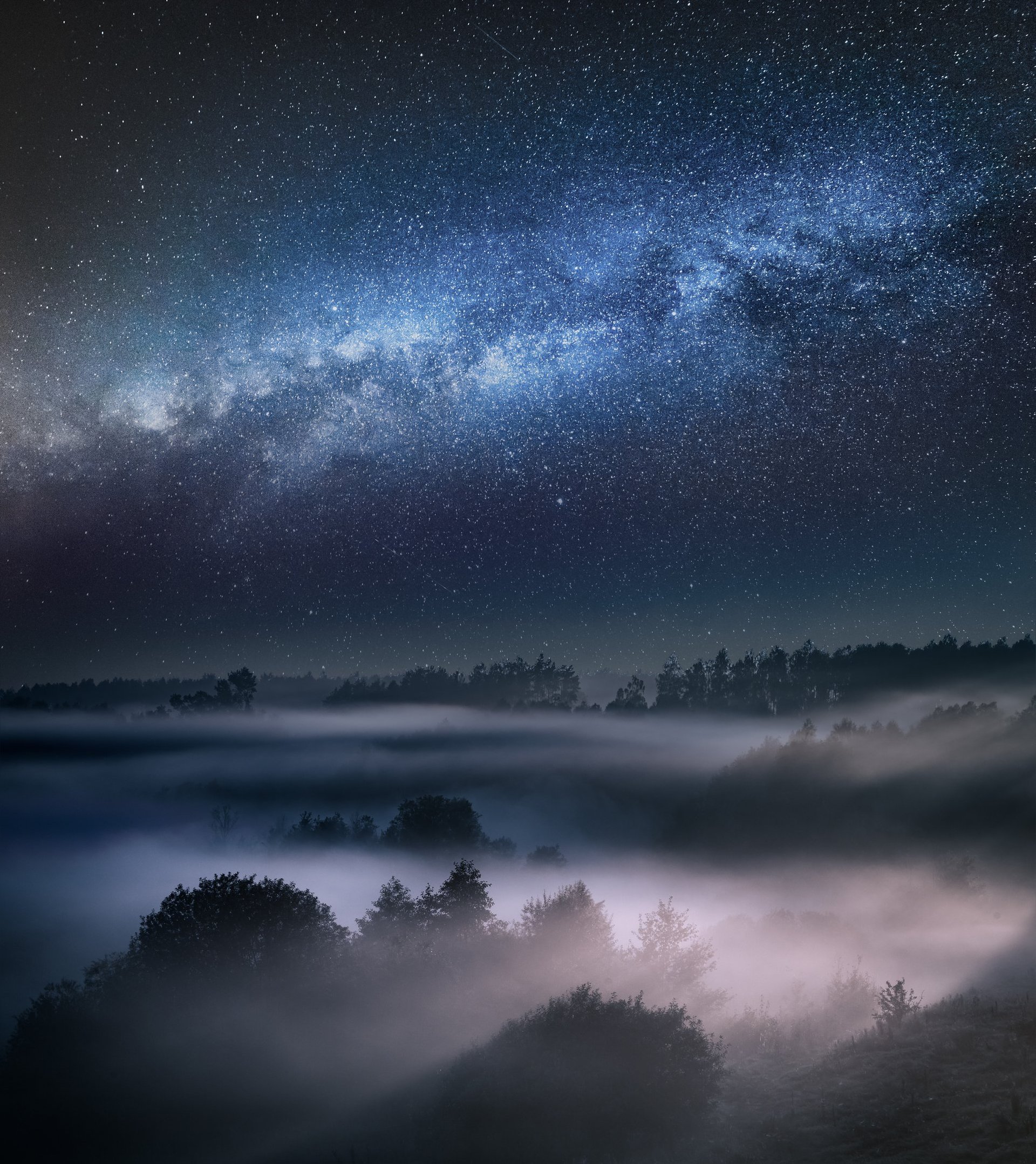
For millennia, the night sky was humanity’s first storybook—a canvas brushed with the silver dust of a billion suns, anchoring our myths, navigating our ships, and mirroring our deepest wonders. Today, that ancient view is fading behind a modern shroud of neon and high-pressure sodium. Yet, if you know where to look and how to step off the grid, the Universe still reveals its secrets entirely to the naked eye, offering a profound, raw connection to the Cosmos that no glass lens can replicate.
The Modern Crisis of the Night Sky
Reclaiming your view of the universe requires understanding what we are up against. A landmark study on global light pollution reveals that over 80% of the world's population—and more than 99% of Europeans—live under an artificially illuminated sky.
According to satellite radiance data compiled by DarkSky International, global skyglow is intensifying at an alarming rate:
Annual Growth: Artificial light at night increases by roughly 2% to 10% per year depending on the region.
The Sickness of Cities: The most polluted European region, Delft en Westland in the Netherlands, exhibits an artificial sky brightness 7,000 times higher than the continent's pristine pockets.
The Vanishing Stars: In a typical inner city (Bortle Class 9), you can spot perhaps 20 to 30 stars. In a true dark-sky reserve, that number explodes to over 5,000 to 6,000 stars visible to the unaided eye.
However, by targeting Europe’s highly successful network of over 31 certified International Dark Sky Parks and learning a few basic visual tricks, you can bypass the urban glare and explore a brilliant stellar theater completely for free.
Why Stargaze Without a Telescope?
While telescopes reveal intricate details of celestial bodies, naked-eye stargazing connects you directly with the night sky in a simple, accessible way. According to a 2022 survey by the European Space Agency, over 60% of Europeans engage in occasional stargazing, often without specialized equipment. Benefits include:
Ease and spontaneity: No need for bulky gear or technical knowledge.
Educational value: Learn to identify constellations, planets, and celestial events.
Natural experience: Enjoy the night sky unobstructed by lenses or screens.
Connection to nature: Appreciate the rhythm of the cosmos and the changing seasons.
Understanding the Stargazer’s Blueprint: The Bortle Scale
Before setting out on your night adventure, it helps to understand how scientists map the quality of darkness. Astronomers measure light pollution using the Bortle Scale, a 1-to-9 numerical framework that evaluates sky brightness.
Bortle 1–2 (Pristine Dark Sky): Absolute natural darkness. The Milky Way casts visible shadows on the ground. Thousands of stars are visible to the naked eye.
Bortle 3–4 (Rural/Suburban Transition): Good, clear darkness with minor light domes on the horizon. The Milky Way is still clearly structured overhead.
Bortle 5–6 (Suburban): The Milky Way is highly washed out or completely invisible. Only major constellations can be traced.
Bortle 7–9 (Urban City Core): A dense orange or white shroud. Only the moon, the brightest planets (like Venus and Jupiter), and a handful of first-magnitude stars can pierce the glare.
To secure an unforgettable view without specialized gear, you should aim for any location designated as Bortle 4 or lower. You can utilize live satellite mapping platforms like the interactive Light Pollution Map to easily pinpoint dark pockets right in your region.
Europe’s Top 5 Bare-Eye Astrotourism Hotspots
While vast urban clusters blanket central Europe, several geographically isolated zones offer incredible sanctuary for raw, unaided stargazing:
1. Roque de los Muchachos, La Palma (Spain)
Known as the "starlight capital of Europe," La Palma boasts a legal mandate to protect its skies from light pollution. The summit of Roque de los Muchachos rises 2,400 meters above a sea of clouds, providing a uniquely stable, clear atmosphere where the Andromeda Galaxy can occasionally be seen with the naked eye.
Location: Canary Islands, Spain
Best Time: May to October for the Milky Way
2. Dark Sky Alqueva (Portugal)
Recognized as one of the best stargazing destinations globally, the Alqueva reserve spans over 3,000 square kilometers across the Alentejo region. Because it experiences exceptionally low light pollution and a high number of clear nights yearly, you can clearly see the sweeping river of the Milky Way without any optical aids.
Location: Southern Alentejo, near the Spanish border
Best Time: Summer and autumn months
3. Kerry International Dark Sky Reserve (Ireland)
Tucked between the Atlantic Ocean and the Kerry Mountains, this reserve on the Iveragh Peninsula is one of the only places in the world designated as a "Gold Tier" reserve that can be experienced fully with just the naked eye. The sweeping dark skies off the edge of Europe offer dazzling, crystal-clear views of shooting stars and constellations.
Location: County Kerry, Southwestern Ireland
Best Time: Winter for the Orionids and crisp, dark skies
4. Pic du Midi, French Pyrenees (France)
At an altitude of 2,877 meters, the Pic du Midi is an astronomical oasis easily accessible via the Pic du Midi cable car. It offers an unobstructed, 360-degree panoramic view of the Pyrenees, providing an incredibly pristine sky where planets and deep-sky objects pop out vividly to the naked eye.
Location: Hautes-Pyrénées, France
Best Time: Summer and early autumn for clear visibility above the clouds
5. Eryri (Snowdonia) National Park (Wales)
As the only Dark Sky Reserve in Wales, Eryri features jagged mountains and vast, untouched valleys that block out the light pollution from nearby cities. On clear, moonless nights, the naked eye is treated to stunning displays of the Milky Way, major constellations, and even visible meteor showers.
Location: Gwynedd, North Wales
Best Time: Autumn and winter
How to Prepare Your Eyes for Ultimate Deep-Sky Vision
Your eyes possess an organic, built-in night vision mode driven by sensory cells called rods. To successfully locate galaxies and nebulae without a telescope, you must master "dark adaptation."
Avoid White Light Contentiously
It takes roughly 20 to 30 minutes of total darkness for human eyes to fully adapt and produce rhodopsin (the chemical needed for night vision). Glancing at a smartphone screen or a vehicle headlight for just one second will instantly reset this biological clock, blinding your deep-sky sight for another half-hour.
Adopt Red Flashlights Only
If you need to check a trail map or navigate safely in the dark, use a dedicated red LED light or place red cellophane tape over your flashlight. Red light utilizes longer wavelengths that do not disrupt your eyes’ dark adaptation or destroy your rhodopsin levels.
Use the "Averted Vision" Technique
The very center of your eye’s retina is packed with cone cells, which excel at identifying sharp colors during daylight but struggle heavily in the dark. The peripheral edges of your retina are lined with hyper-sensitive rods. If you are trying to view a faint object—like the Andromeda Galaxy (M31)—do not look straight at it. Instead, look slightly to the side of the object. The faint smudge will instantly pop out and look significantly brighter.
What to Look for in the European Night Sky
Depending on the season of your European excursion, different cosmic structures will take center stage:
Spring:
Spring nights provide a great bridge between fading winter stars and rising summer targets. The humidity often drops, making the air ideal for spotting distant galaxies.
Key Constellations: Look for Leo the Lion (marked by the backwards question-mark shape of stars) and Ursa Major (the Big Dipper).
What to See: The Virgo Cluster of galaxies for those using telescopes, and the Beehive Cluster (M44) visible low in the western sky using binoculars.
Meteor Showers: The Lyrids, peaking in late April with bright shooting stars.
Summer:
Summer nights feature shorter periods of astronomical darkness, but compensate with the glorious glowing arch of the Milky Way and warmer weather.
Key Constellations: Look directly overhead for the Summer Triangle, a massive asterism formed by the bright stars Vega, Deneb, and Altair.
What to See: Within the Summer Triangle, spot the Ring Nebula (M57) and the Dumbbell Nebula. The center of the Milky Way is also at its highest visibility.
Meteor Showers: The Perseids in mid-August, widely considered the best and most active meteor display of the year.
Autumn:
Autumn skies offer the best balance of long, dark nights and mild temperatures, making it a favorite for both casual and seasoned stargazers.
Key Constellations: Pegasus (the large Great Square), and Andromeda.
What to See: The Andromeda Galaxy (M31), the most distant object visible to the naked eye, appearing as a faint smudge in the eastern sky.
Meteor Showers: The Draconids (October) and the reliable Orionids (October).
Winter:
Winter brings crystal-clear, crisp skies because the cold air traps less humidity and haze. It is the best time of year for viewing dazzling star clusters and nebulae, though you will need to dress in thermal layers.
Key Constellations: Orion the Hunter (recognizable by his famous Belt), Taurus, and Canis Major (home to Sirius, the brightest star in the night sky).
What to See: The Orion Nebula (M42), a massive, colorful stellar nursery visible just below Orion's belt.
Meteor Showers: The Geminids (December), which produce brilliant, multi-colored shooting stars.
The Core of the Milky Way
Visible across Europe throughout the summer months. It cuts a glowing, cloudy path right across the celestial dome. Look directly toward the southern horizon on a moonless summer night to spot the dense, core star clouds winding through the constellation Sagittarius.
Major Meteor Showers
Without a telescope, you actually have a distinct advantage during a meteor shower because your natural field of view is significantly wider than a glass lens. Keep an eye out for the Perseids (peaking around August 11–13 with up to 100 meteors per hour) or the Geminids (peaking around December 13–14), where bright space dust incinerates spectacularly in our upper atmosphere.
Deep Space Objects
Under a Bortle 3 sky, look high up for a faint, elongated oval patch of light. You are looking at the Andromeda Galaxy, a massive spiral system located 2.5 million light-years away. It is the most distant object human eyes can see without an instrument. In the winter, look just below Orion’s belt to view the fuzzy stellar nursery known as the Orion Nebula.
A Naked-Eye Stargazer's Packing List:
An Insulated Ground Mat or Reclining Lawn Chair: Straining your neck upward for hours causes severe fatigue. Lying completely flat keeps you comfortable and broadens your field of vision.
Heavy Layers & Blankets: Even during peak Mediterranean summers, outdoor night temperatures drop sharply when skies are clear.
A Real-Time Star Map Mobile App: Use open-source tools like SkyView or similar. Remember to turn on the app's internal "Night Mode / Red Screen" feature before opening it outside.
Hot Drinks: A thermos of hot tea or cocoa keeps your core body temperature stable, allowing you to stay outside far longer.
Stargazing in Europe without a telescope is a journey not just through space, but through wonder itself. The night sky, vast and shimmering, whispers ancient tales written in starlight—waiting for your eyes to catch their glow. From the silent, dark realms of La Palma to the rugged, majestic peaks of Norway, the cosmos stretches out like a timeless poem, inviting you to become part of its story. Step outside, lift your gaze, and let the celestial dance of stars ignite your imagination and fill your soul with beauty. In the quiet embrace of the night, the Universe reveals its magic, and you, simply by looking up, become a witness to its endless beauty.
Keep looking at the stars.
References:
Bortle, J. E. (2001). Introducing the Bortle Dark-Sky Scale. Sky & Telescope, 101(2), 126-129.
European Cap Network. (2024). Aiming for the stars: Astrotourism in rural areas. European Commission. europa.eu
Kyba, C. C., Altıntaş, Y. Ö., Walker, C. E., & Kardel, M. (2023). Citizen scientists report global rapid reductions in the visibility of stars from 2011 to 2022. Science, 379(6629), 265-268.
Keep reading:
Europe’s Practically Secret Locations for Stargazing That Will Leave You speechless
Contact
Questions or tips? Reach out anytime:
SUBSCRIBE:
© 2025. Stargazing Europe All rights reserved.
Find best locations for stargazing and best spots for dark sky views:
Home
About
Blog
Locations