List of Galaxies You Can See From Europe
6/11/20265 min read
Looking at starry sky and deep Space is one thing that will almost always make you feel like it's true magic. Those distant, bright lights hold so many secrets and stories that can keep you curious every time. The night sky provides an incredible variety of captivating and inspiring sights for anyone who wants to look and admire the wonderful celestial sight.
When you think about stargazing, you might picture twinkling stars, bright planets, or maybe the Moon. But beyond those familiar sights, the night sky holds something even more extraordinary: entire galaxies, swirling islands of stars, gas, and dust millions of light-years away. Seeing a galaxy with your own eyes—whether through binoculars or a telescope—is like peeking into the vastness of the universe and witnessing its grandeur firsthand.
The idea of observing galaxies might sound intimidating or reserved for professional astronomers, but many galaxies are bright and large enough to be seen if you head to a dark sky place away from city lights. No matter your level of experience, there’s something thrilling about spotting these distant cosmic neighbors and knowing you’re looking across incomprehensible distances in space and time.
But, what galaxies can you actually see when you stargaze?
If you find a nice, dark spot away from city lights and know where to look, you’ll be surprised how many galaxies are actually visible. It’s kind of incredible to realize that when you’re looking at these little, bright spots, you’re peering across millions of light-years into the universe’s deep past.
So, if you’re curious and want to start your galaxy-hunting adventure, here’s an easygoing guide to some of the coolest galaxies you can spot while stargazing.
Visible to the Naked Eye:
The Milky Way
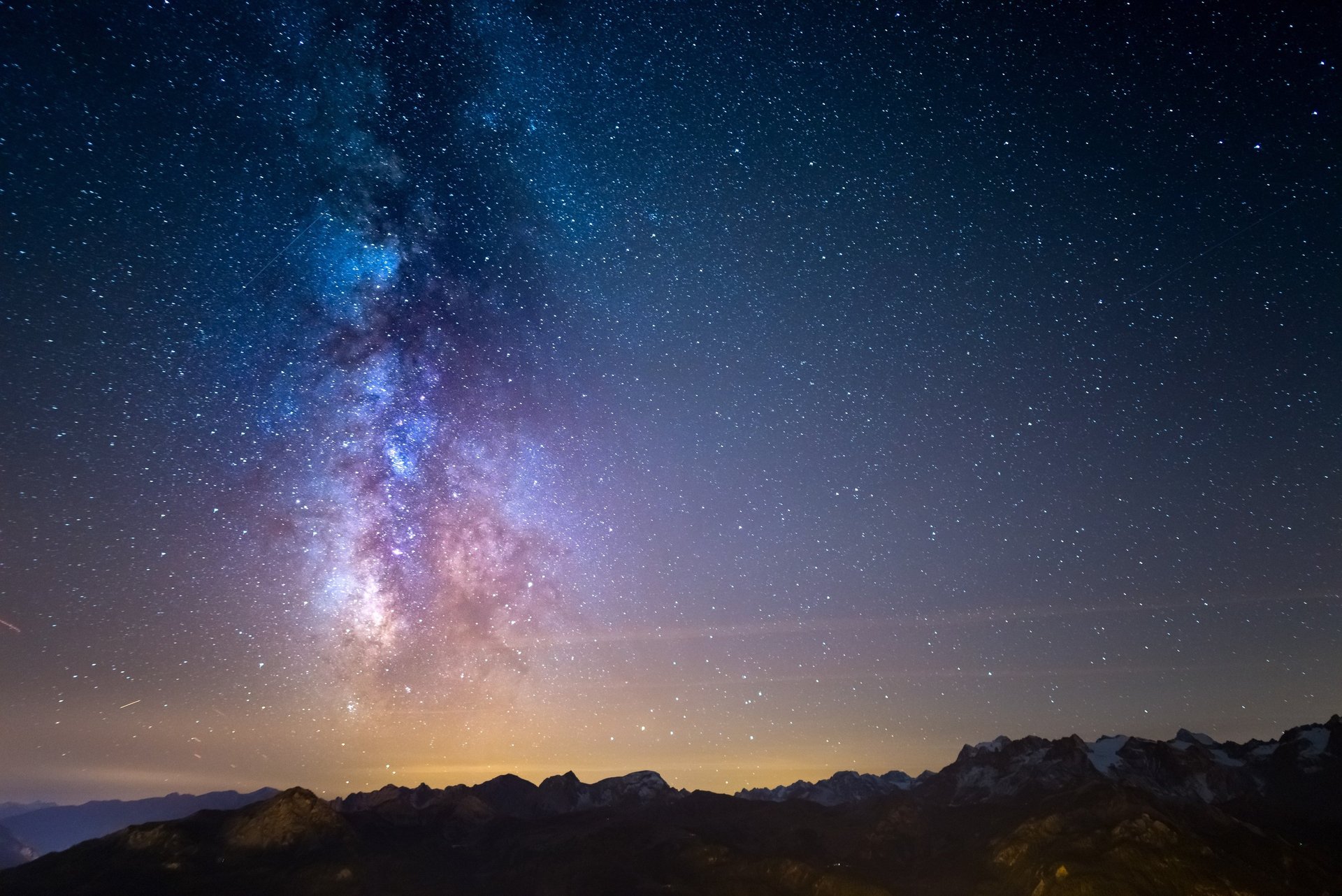
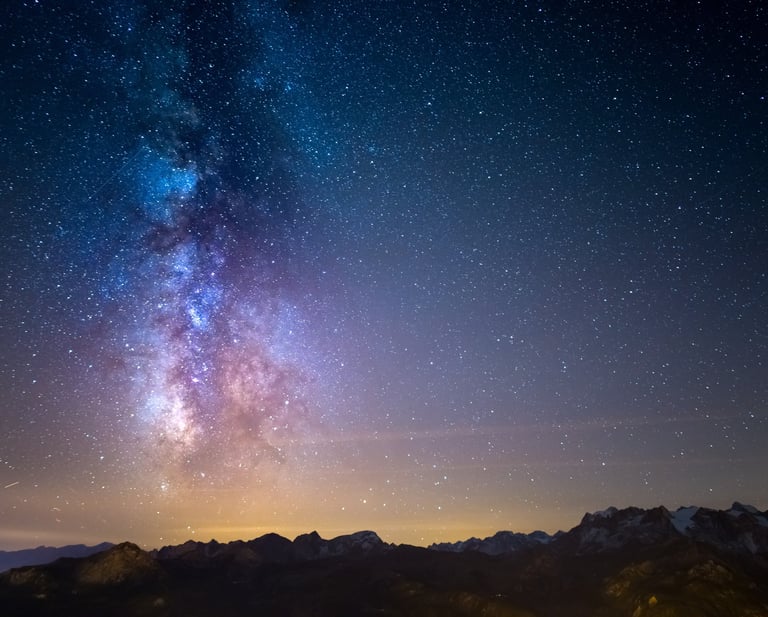
This is our galaxy and seeing it in light-polluted Europe requires escaping to high-altitude areas or remote wilderness, and dark sky locations - specifically during the New Moon on clear, moonless nights.
The Milky Way is the colossal barred spiral galaxy that contains our Solar System. It is home to an estimated 100 to 400 billion stars and at least as many planets. The name derives from its appearance luminous band of light stretching across the night sky.
In the Northern Hemisphere, it appears as a glowing, cloudy band across the sky. It is best viewed during the summer and early autumn months when the galactic center is highest
The Andromeda Galaxy (M31)
The Andromeda Galaxy is probably the most famous galaxy you can see without any special equipment—it’s the closest big galaxy to the Milky Way, sitting about 2.5 million light-years away. On a clear, dark night, Andromeda looks like a faint, blurry smudge in the sky, hanging out in the constellation Andromeda.
Grab some binoculars or a small telescope, and that smudge starts to look a little more like a real galaxy. You can make out its bright core, and if conditions are just right, maybe even the hints of its spiral arms. It’s wild to think that the light you’re seeing left that galaxy millions of years ago, long before humans walked the Earth. And fun fact: Andromeda and the Milky Way are slowly moving toward each other and will eventually crash together in a few billion years. It’s a slow cosmic dance happening on a scale that’s hard to imagine.
Want to find out the Best Places to See the Andromeda Galaxy in Europe ?
Visible with Binoculars:
Bode's Galaxy (M81) and The Cigar Galaxy (M82)
Located in the Ursa Major (Great Bear) constellation, these two are a popular pair for stargazers. M81 is a beautiful spiral, while M82 is an irregular "starburst" galaxy. You can spot both of them simultaneously in the same field of view with binoculars.
The Triangulum Galaxy (M33)
The Triangulum Galaxy is a little trickier to find, but totally worth the effort. It’s a smaller spiral galaxy sitting in the constellation Triangulum, and it’s the third-largest member of our local galactic gang.
You probably won’t see it with your naked eye unless conditions are perfect, but binoculars or a telescope will show a glow. With bigger scopes, you might even catch glimmers of star-forming regions, those beautiful knots where new stars are being born. It’s a softer, more delicate galaxy than Andromeda but no less fascinating.
Galaxies Requiring a Telescope:
The Whirlpool Galaxy (M51)
The Whirlpool Galaxy is one of those galaxies that really grabs your attention. You’ll find it in the constellation Canes Venatici. What makes it special is the way it looks like it’s waving its spiral arms around, especially because it’s interacting with a smaller companion galaxy.
To the naked eye, it’s just a distant patch, but if you have a decent telescope, you’ll see a bright core and maybe some structure in those arms. It’s a favorite among amateur astronomers because it shows off how galaxies can pull and tug on each other, sparking new star formation.
The Pinwheel Galaxy (M101)
The Pinwheel Galaxy is a big, face-on spiral galaxy hanging out in Ursa Major, near the Big Dipper. It’s pretty large and bright, making it a solid target for binoculars and small telescopes.
While you might not see its beautiful spiral arms clearly without advanced gear, you can catch its bright core glowing in the night sky. It’s a great example of those majestic spiral galaxies we often see in pictures.
The Leo Triplet
The Leo Triplet (also called the M66 Group) is a stunning gathering of three gravitationally interacting spiral galaxies located approximately 35 million light-years away in the constellation Leo.
The triplet is a favorite target for astronomers because all three galaxies easily fit into a single telescope's field of view, yet each appears quite different depending on its tilt. The trio consists of:
M65: An intermediate spiral galaxy tilted at an angle that shows off its defined spiral arms and older central star populations.
M66: The largest and brightest of the three, sporting loosely wound arms and an elongated center warped by the gravitational pull of its neighbors.
NGC 3628: Also known as the Hamburger Galaxy, this one is viewed perfectly edge-on. It is famous for a thick, obscuring band of dust slicing right through its middle and a massive, glowing "tidal tail" ripped out by the gravity of the other two galaxies.
Tips to Make Galaxy Hunting More Fun
Get Away from City Lights: Light pollution makes it really hard to see faint galaxies, so find the darkest spot you can.
Bring Binoculars or a Telescope: Even a modest pair of binoculars can reveal amazing details.
Watch the Moon: Try to stargaze when the Moon is new or below the horizon so the sky is darker.
Use a Star Map or App: Knowing where to look makes all the difference.
Be Patient: Your eyes need time to adjust to the dark—give them at least 20-30 minutes.
Join a Stargazing Group: Local astronomy clubs often have fun meetups where you can use better equipment and learn from others.
And the conclusion
Galaxies are some of the most amazing sights you can see in the night sky. Each one is a massive, swirling collection of stars that has traveled millions of light-years just to be seen by you tonight. When you spot one, you’re connecting with the Universe on a scale that’s hard to put into words.
So next time you’re outside on a clear night, take a moment to look a little deeper than the stars you know. With a bit of curiosity and a little help from binoculars or a telescope, you might find yourself staring at one of these distant cosmic islands—and that’s a pretty amazing feeling.
Keep looking at the stars.
Read some more:
Europe’s Practically Secret Locations for Stargazing That Will Leave You speechless
A practical guide to finding undiscovered and less known spots for stargazing in Europe
Contact
Questions or tips? Reach out anytime:
SUBSCRIBE:
© 2025. Stargazing Europe All rights reserved.
Find best locations for stargazing and best spots for dark sky views:
Home
About
Blog
Locations