Alpine vs. Mediterranean Stargazing: Which Offers the Best Night Sky?
7/20/20265 min read
There is a quiet magic that happens when the sun slips below the horizon and the world surrenders to the dark. For centuries, humans have looked up at the stars to find their way, to tell stories, and to remember how beautifully small we are. Today, as urban sprawl and light pollution swallow our night skies, chasing true darkness has turned astrotourism into a modern pilgrimage.
If you are planning a dedicated vacation to sit at the edge of the Universe, two European landscapes offer completely different ways to experience the cosmos: the silent, soaring peaks of the Alps and the warm, whispering coasts of the Mediterranean.
One is a kingdom of ice and stone reaching up to touch the skies; the other is a gentle shoreline where the infinite sky meets an infinite sea. But if you have to choose just one for your next nocturnal escape, which destination offers the best places for stargazing?
Let’s look at how these two iconic regions compare for dreamers, amateur astronomers, and those seeking the ultimate backdrop for Milky Way astrophotography.
1. Atmospheric Clarity: High Peaks vs. Coastal Mist
The Alps: Pure Elevations and Unpolluted Skies
In the mountains, altitude is your ultimate advantage. As you ascend into the alpine wilderness, you rise far above the heavy, hazy layer of air that hugs the lowlands.
The Atmosphere: Up here, the air is thin, exceptionally crisp, and stripped of dust and moisture.
The View: Stars do not just twinkle here; they burn with a fierce, sharp brilliance.
The Reality: You easily get above the low-lying smog and moisture that blurs city skies, unlocking an incredibly low Bortle scale rating (the measure of night sky darkness).
Optical Clues: Because there is less air overhead to scatter light, deep-sky objects like the Andromeda Galaxy or the Orion Nebula reveal far more structure through binoculars or telescopes.
The Mediterranean: The Soft Coastal Glow
Stargazing at sea level means looking through the densest, most active layer of the Earth's atmosphere.
The Moisture: Marine air is heavy with salt, suspended water vapor, and coastal heat haze.
The View: This humidity acts like a soft filter, gently blurring the sharpest details of distant galaxies and causing stars closer to the horizon to shimmer heavily.
The Challenge: Coastal lights can bounce off this damp air, creating a persistent dome of skyglow unless you head to isolated island dark-sky preserves.
The winner: For raw, unfiltered optical clarity, the mountains win. The alpine sky is a sharp sheet of glass.
2. The Weather: Volatile Peaks vs. Reliable Shores
The Mediterranean: Endless Summer Nights
The Mediterranean is governed by stable, predictable summer weather systems that are an astronomer's dream.
The Promise: Stable high-pressure systems bring weeks of uninterrupted, cloudless skies from June to September.
The Peace of Mind: You can book a trip months in advance with a very high chance of getting a perfect night under the stars.
The Benefit: Dew points remain predictable, meaning your telescope lenses or camera gear are less likely to fog up mid-session.
The Alps: The Mood of the Mountains
High peaks create their own unpredictable, dramatic, and sometimes unforgiving weather microclimates.
The Risk: A flawless, sunny afternoon can warp into a thick blanket of mountain fog or a sudden thunderstorm by midnight.
The Season: Winter and early spring offer the most transparent, bone-dry skies, but heavy snow often blocks the roads to the highest and darkest viewing spots.
The Reality: Stargazers must become amateur meteorologists, constantly checking satellite maps for sudden wind shifts that bring cloud cover over the ridges.
The winner: If you want to guarantee clear skies for a short vacation, bet on the coast. The Mediterranean offers unparalleled predictability.
3. The Experience: Freezing for the Cosmos vs. Stargazing in Shorts
The Alps: An Adventure for the Dedicated
Alpine stargazing is a beautiful endurance test that demands careful preparation and physical effort.
The Climate: Temperatures plummet rapidly after dark. Even in July, midnight at high altitudes can hover near freezing.
The Routine: Essential stargazing tips for the mountains include packing heavy winter coats, thermal layers, gloves, and a thermos of steaming tea.
The Journey: Reaching the darkest, quietest valleys often means strenuous hiking, navigating pitch-black trails with a red headlamp, or coordinating with specific cable cars that run late-night schedules.
The Mediterranean: Midnight Comfort
The Mediterranean treats stargazing not as an expedition, but as a sensory, laid-back luxury.
The Vibe: The night air is warm and comforting, carrying the scent of wild rosemary, sea salt, and coastal pine.
The Routine: There is no need for heavy gear. You can lie on a beach blanket in a t-shirt and shorts, listening to the rhythmic lap of the waves against the shore.
The Journey: Many incredible dark sky spots are highly accessible, requiring just a short, effortless drive from comfortable coastal villages or seaside resorts.
4. The Canvas: What Does Your Universe Look Like
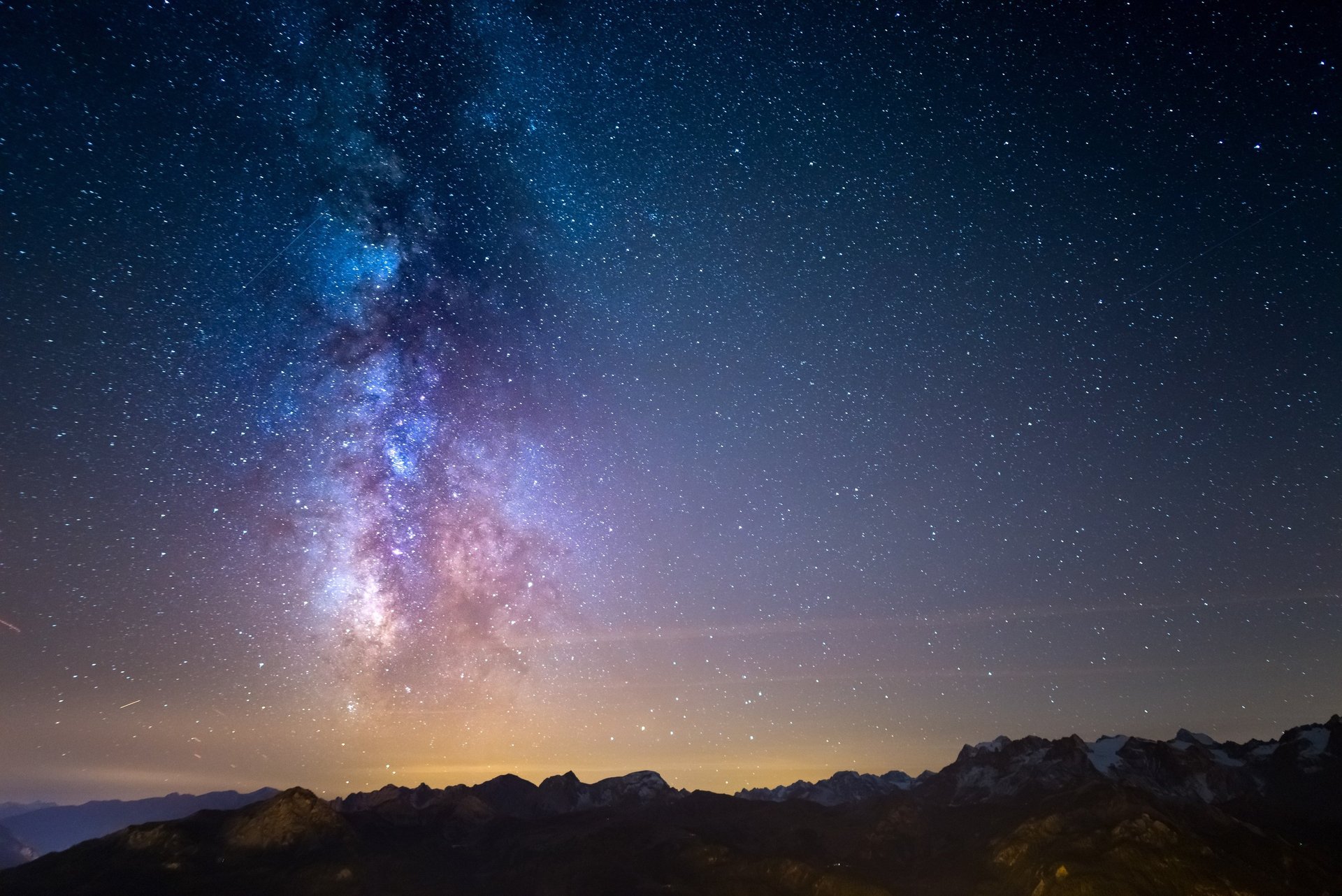
The Alpine Landscape: Jagged limestone summits, glacial ridges, and dark pine forests cut dramatic silhouettes against the glowing band of our galaxy. The sheer verticality of the landscape provides breathtaking foreground structures for wide-angle Milky Way astrophotography. It feels like standing on the roof of the world.
The Mediterranean Landscape: A flat, endless sea horizon lets you track satellites, planets, and constellations right down to the water's edge. You gain access to southern constellations that are blocked by northern mountain ridges. On perfectly calm nights, the sea becomes a dark mirror, reflecting the brightest stars and the moon onto the water.
The winner: It’s a tie. Choose the Alps for rugged, dramatic landscapes, or the Mediterranean for peaceful, watery horizons.
5. Top Spots to Plant Your Tripod
If you are ready to book an astrotourism vacation, both regions boast dedicated dark-sky sanctuaries where light pollution is strictly controlled.
Elite Alpine Dark Sky Spots
The Swiss Alps (Susten Pass & Simplon Pass): High-altitude mountain passes that offer paved road access to incredibly dark, high-elevation plateau spaces well above the tree line.
The French Alps (Mercantour National Park): A designated International Dark Sky Reserve offering pristine valleys, minimal light pollution, and dramatic mountain backdrops.
Elite Mediterranean Dark Sky Spots
The Greek Islands (Inland Crete or isolated Cyclades): Moving away from the resort towns into the mountainous interiors of islands like Crete reveals exceptionally dark skies surrounded by the sea.
The Croatian Islands (Lastovo Archipelago): A designated nature park and one of the darkest spots in the Adriatic, famous for its crystal-clear marine night skies and excellent Bortle scale conditions.
The Ultimate Decision
Follow the trail to the Alps if:
You want to see the deepest, sharpest details of nebulae, star clusters, and planets.
You love the thrill of cold, wild adventures, high altitude, and mountain solitude.
You are a serious photographer looking for dramatic, jagged mountain framing.
Escape to the Mediterranean if:
You want a relaxing holiday where the stars are a romantic backdrop to your evenings.
You want to stargaze in complete comfort without packing bulky winter gear.
You need reliable, clear summer weather to guarantee your time under the night sky.
Keep your eyes on the stars.
Keep reading:
The ultimate Guide to stargazing in Europe without a telescope or expensive gear
Contact
Questions or tips? Reach out anytime:
SUBSCRIBE:
© 2025. Stargazing Europe All rights reserved.
Find best locations for stargazing and best spots for dark sky views:
Home
About
Blog
Locations