Europe's Top Spots for Moon Watching
5/1/20267 min read
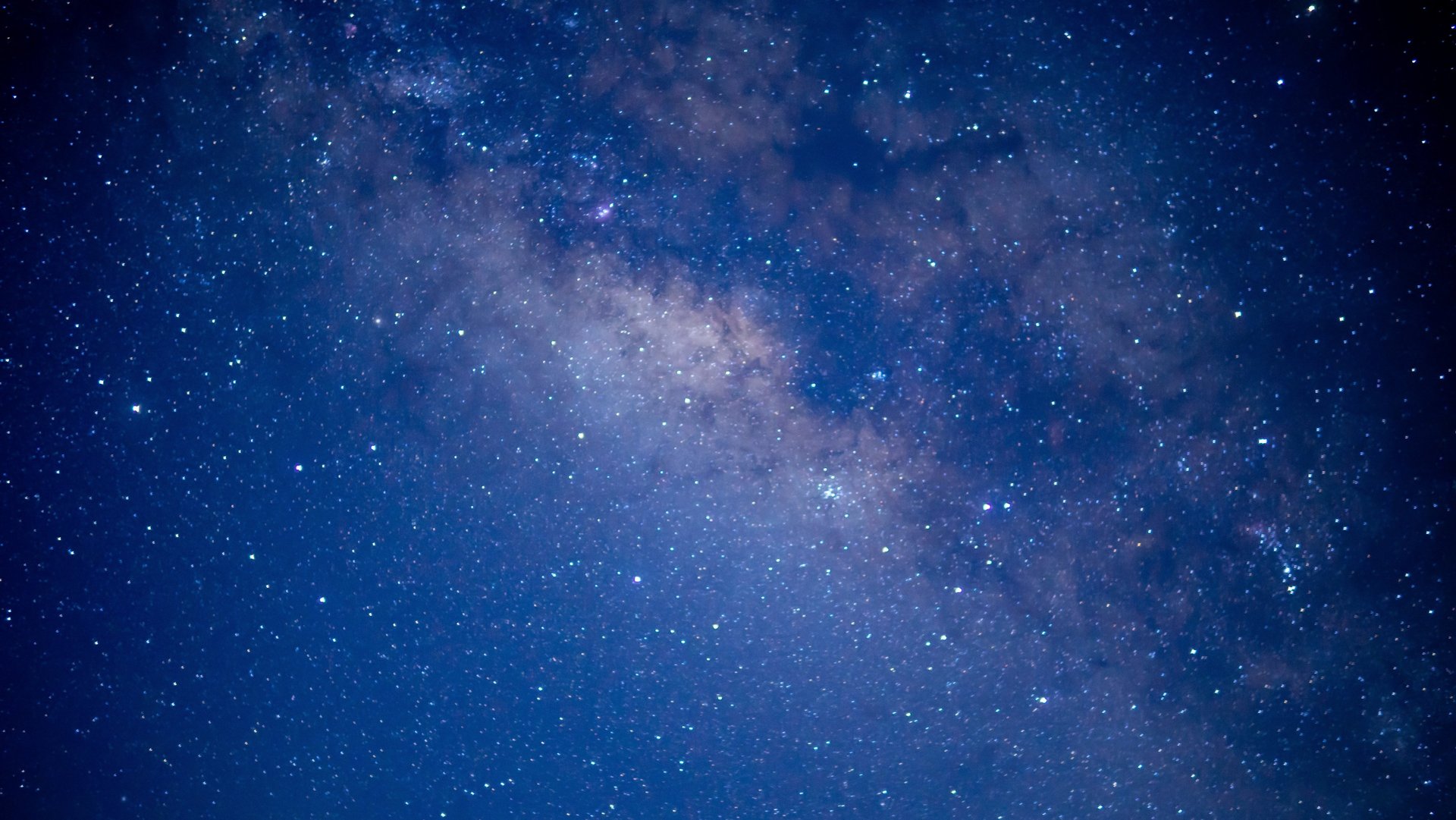
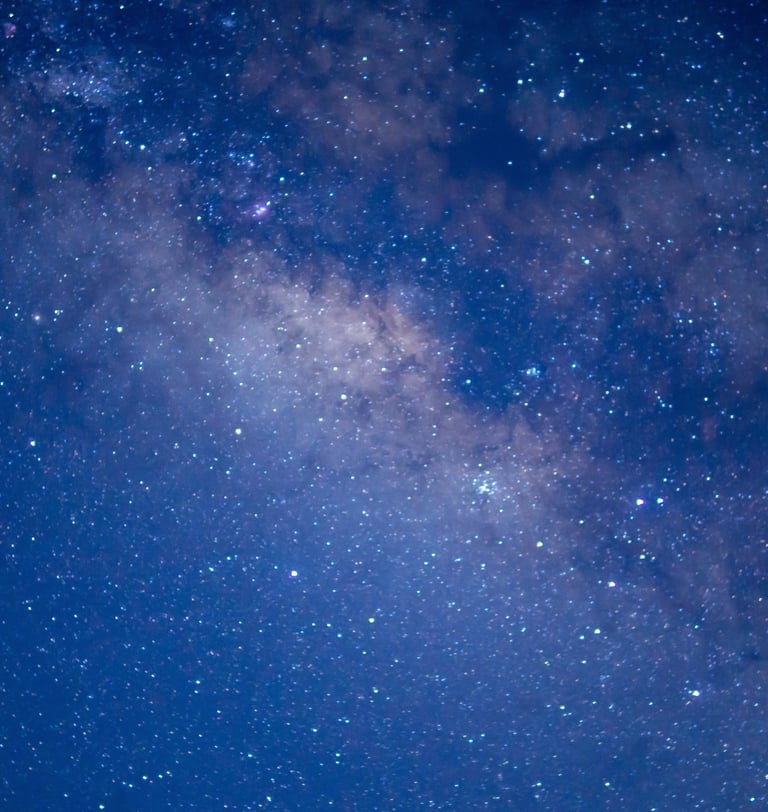
There's something quietly extraordinary about watching the Moon rise. Not through a screen, not from a city window washed out by streetlights, but from a hillside or open field where the sky belongs to you and the dark is genuinely dark. Europe, with all its urban density, is still home to remarkable places of unspoiled night sky. From volcanic islands above the clouds to ancient flatlands and lamp-free islands in the English Channel, you can experience world-class moon-viewing for travellers willing to seek it out.
Let's check them out:
Portugal: Alqueva, Alentejo
If there's one place in Europe that deserves to be called a moon-watcher's sanctuary, it's the Alqueva region in Portugal's Alentejo. In 2011, it became the world's first site to receive the Starlight Tourism Destination certification, and shortly after it was recognised as Europe's first designated Dark Sky Reserve, a title it has held and protected ever since.
The reserve is built around the vast Alqueva reservoir and the surrounding low-light villages of Monsaraz, Reguengos, and Mourão. The skies here are so devoid of light pollution that the Moon's craters, mountain ranges, and maria (the dark plains on the lunar surface) are visible with even a modest pair of binoculars. The local Dark Sky Alqueva observatory runs nightly stargazing sessions in English and Portuguese, where guides point out lunar features that most people have never noticed before.
Practically speaking, the dry Alentejo climate means clear nights are frequent, the landscape is flat and open, and the surrounding area is easy to drive between. It's one of the rare places in Europe where you can go dark-sky spotting and wake up to great food and wine the next morning.
Best time to visit: Year-round, but spring and autumn offer the clearest skies with comfortable temperatures.
Spain: La Palma, Canary Islands
La Palma floats in the Atlantic some 100 kilometres off the northwest coast of Africa. As a Spanish territory, it sits firmly in the European universe, and it's home to one of the most important observatories on the planet. The Roque de los Muchachos Observatory, perched at 2,396 metres above sea level, hosts instruments from research institutions across Europe and beyond.
What makes La Palma exceptional for moon viewing isn't just the altitude, it's the combination of factors that draw professional astronomers here. The island sits above a persistent layer of cloud, so observers look up through clean, stable air that barely trembles. The Canary Islands Sky Protection Law, passed in the 1980s, strictly regulates artificial lighting across the island, keeping La Palma among the least light-polluted environments in Europe.
On a clear night, which is most nights, the Moon appears with startling resolution. The terminator line, the sharp boundary between the lunar day and night, is visible to the naked eye.
With even a modest telescope, individual craters snap into focus with a precision that will amaze you.
The island has leaned into its astrotourism identity, offering guided telescope nights, dark-sky lodges, and self-guided astronomy routes through the national park.
Best time to visit: Late spring through summer for the most stable, cloud-free nights above the cloud layer.
France: Pic du Midi, Pyrenees
Not every great moon-viewing location is about darkness alone. At 2,877 metres in the French Pyrenees, the Observatoire du Pic du Midi brings something rarer: professional-grade views of the sky, open to ordinary visitors.
The observatory was founded in 1878, and it has a uniquely personal relationship with the Moon. In the 1960s, NASA used imagery from Pic du Midi's instruments to map the lunar surface before the Apollo missions, making it one of the few places on Earth with a direct, documented role in the history of human lunar exploration.
Visitors reach the summit by cable car from the town of La Mongie, and overnight astronomy packages are available that include dinner at altitude, guided telescope time, and a sunrise from the top of the Pyrenees. At this elevation, the thin air strips away most of the atmospheric turbulence that distorts views at lower altitudes.
Through one of Pic du Midi's instruments, the Moon is not just visible, it becomes sculptural. Shadows pool in crater basins. The highlands glow. Surface texture becomes real in a way it simply isn't from the valley below.
Best time to visit: Late spring through early autumn, when the cable car runs and mountain weather is most cooperative.
United Kingdom
The UK is not the first country that comes to mind for clear night skies, but it has invested seriously in protecting what remains. Several sites now hold international designations, and they genuinely deliver on dark nights.
Here they are:
Galloway Forest Park, Scotland:
Covering over 300 square miles of ancient woodland and open moorland in southwest Scotland, Galloway Forest Park is the UK's first and largest Dark Sky Park. The remote location, far from major cities, and active light management in surrounding communities means the darkness here is real and substantial.
The park's open moorland viewpoints, particularly around Clatteringshaws Loch and the Starfield Visitor Centre, offer unobstructed views to every horizon.
On calm nights, the Moon reflects in the dark surface of the loch below, doubling the spectacle. Rangers run regular astronomy events, and dedicated Dark Sky Discovery Sites are spread throughout the park with information boards to guide you.
Best time to visit: Autumn and winter for long, crisp, clear nights.
Brecon Beacons, Wales
Designated an International Dark Sky Reserve in 2013, the Brecon Beacons National Park in south Wales has a particular advantage over many darker locations: it's accessible. Within a few hours of Cardiff, Bristol, and London, it's possible to drive into genuinely dark countryside without committing to a remote expedition.
Viewing points range from the broad open ridges of Pen y Fan to the quiet reservoirs of the Elan Valley on the park's western edge.
The park's Dark Sky Discovery Sites are well-signposted and cater to all levels, some are roadside pull-ins, others require a short walk into the hills. On a full moon night, the limestone escarpments glow and the entire upland landscape takes on a cold, luminous quality that's hard to describe and easy to remember.
Best time to visit: Autumn through spring, when nights are longest and summer visitor numbers have dropped.
Sark, Channel Islands
Sark is, by almost any measure, an unusual place. A small island community of around 600 people, it has no cars, no public streetlights, and no airport. You reach it by ferry from Guernsey. In 2011, it became the world's first designated Dark Sky Island, recognised by the International Dark-Sky Association.
The absence of artificial light on Sark is not a campaign or a marketing angle, it's simply how the island has always been. After dark, the only lights are candles in cottage windows and whatever the sky above is offering.
The Moon rising over Sark's sea cliffs and the wide Atlantic beyond is the kind of experience that's difficult to put into words, quiet, total, and strangely moving. There is a small observatory on the island, but many visitors simply step outside and look up. No equipment needed.
Best time to visit: Any time of year. Winter crossings can be rougher by ferry, but the long winter nights make the journey worthwhile.
Hungary: Hortobágy National Park
The Hortobágy is Hungary's oldest national park, a UNESCO World Heritage Site, and a certified International Dark Sky Park, a vast, ancient grassland (puszta) in eastern Hungary that has remained essentially unchanged for centuries. What makes it unusual for astronomy is its geography: it's completely flat.
Most celebrated dark-sky locations sit in mountains or valleys. Hortobágy gives you a 360-degree, unobstructed horizon in every direction.
The Moon rises dramatically from the flat plain, appearing enormous near the horizon, a perceptual effect magnified by the total openness of the surroundings. Standing here, you understand why the herdsmen who worked this land for generations had an intimate relationship with the night sky.
The park has its own observatory and runs guided public astronomy programmes, including dedicated moon-watching sessions where telescopes are trained on the lunar surface.
The experience is enriched by the park's cultural layer, rangers often weave the history of the puszta and its people into the night-sky interpretation. Visitor infrastructure is improving steadily, with designated viewing areas and low-impact lighting installed across the park.
Best time to visit: Summer for warm nights and the most settled conditions; autumn for longer darkness and crispness in the air.
Iceland: Vatnajökull National Park
Vatnajökull National Park covers approximately 14% of Iceland's entire landmass, making it the largest national park in Europe. At its centre is Europe's biggest glacier, a colossal white expanse surrounded by volcanic ridges, glacial rivers, and landscape that, more than anywhere else on Earth, resembles the surface of the Moon.
That resemblance has historical weight: NASA sent Apollo astronauts to Iceland to train on its volcanic terrain, reasoning it was the closest analogue on Earth to what they'd encounter when they landed. Standing at Jökulsárlón glacial lagoon on a clear night, the full Moon reflected in the black water, ice floes drifting silently, the surrounding peaks lit with cold lunar light, is a deeply strange and beautiful experience.
Iceland's northern latitude means winter nights are extremely long, and the low population density keeps light pollution minimal across the vast interior.
In winter, there's also the possibility of watching moonlight and aurora borealis share the same sky, a combination almost nowhere else in Europe can offer.
In summer, be aware that Iceland experiences near-constant daylight around the solstice, so the Moon essentially vanishes from the night sky for several weeks.
Best time to visit: September through March for dark skies and the possibility of aurora. Avoid June and July if you're specifically chasing the Moon.
Conclusion
What connects these places, a Portuguese reservoir, a Pyrenean peak, a tiny Channel Island, a glacier in the North Atlantic, is that they've each kept the night intact.
They've pushed back against the slow creep of artificial light and preserved something that most of the world has quietly, gradually lost.
You don't need expensive equipment for most of these locations. A clear sky and the patience to let your eyes adjust are enough to begin with. Start with a full moon to experience the landscape it illuminates. Then return on a crescent or quarter phase, when shadows are longer, when crater rims stand in sharp relief, when the Moon stops being a light source and becomes a world.
It has been up there for 4.5 billion years. Finding a dark enough sky to truly see it, though, is getting rarer, and all the more worth the trip.
Happy gazing - and clear skies
Contact
Questions or tips? Reach out anytime:
SUBSCRIBE:
© 2025. Stargazing Europe All rights reserved.
Find best locations for stargazing and best spots for dark sky views:
Home
About
Blog
Locations